Google Business Agent for YouTube Ads in 2026: A Retailer Readiness Guide
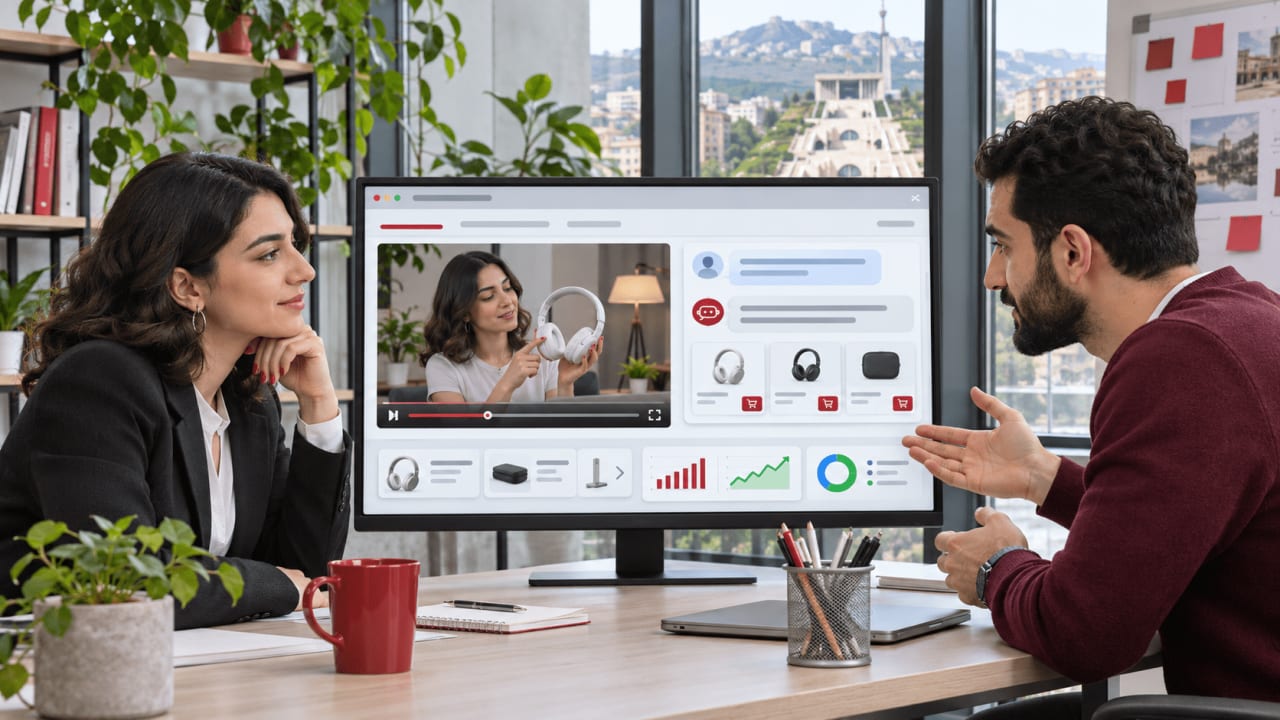
A shopper watching a product video may still need answers before clicking: Does this model fit a small room? Is the accessory included? Which size is right? Google is testing a way to answer those questions inside the ad experience. The Google Business Agent for YouTube Ads beta embeds conversational product guidance alongside eligible YouTube ads so viewers can research without leaving the video context.
That convenience also creates a new quality-control problem. A fluent answer can still be incomplete, outdated, or disconnected from inventory, policy, and the landing page. This guide explains how retailers should audit eligibility, product data, answer boundaries, handoff, measurement, and escalation before treating the beta as a conversion tool.
What Google Business Agent for YouTube Ads does
Google announced the U.S. retailer beta in September 2026. According to its agentic commerce update, eligible retailers can embed Business Agent in YouTube ads so viewers can ask complex product questions and receive tailored guidance without leaving YouTube. Google also included the capability in its September Demand Gen Drop for video ads with product feeds.
This is not a general release for every advertiser or market. The announced beta targets eligible U.S. retailers, and enrolment begins with Google's sign-up and eligibility process. An Armenia-based business should therefore separate three questions: where the company is based, where products are sold, and whether the relevant Merchant Center and advertising accounts are eligible. Product planning should not assume access before the account confirms it.
Where this experience fits in the customer journey
Business Agent sits between video discovery and the retailer's owned purchase journey. It can help a viewer clarify product details while attention is still on the ad, but it does not replace the product page, checkout, customer support, or the business's responsibility for accurate claims.
| Layer | Primary job | Failure to prevent |
|---|---|---|
| YouTube ad | Create interest and set a clear product promise | Creative that implies a feature the catalogue cannot support |
| Business Agent | Answer product questions and guide evaluation | Confident but stale, vague, or unsupported answers |
| Product feed | Supply structured product facts and eligible assets | Price, variant, availability, or compatibility mismatch |
| Landing page | Continue the exact product and message | Sending an informed viewer to a generic category page |
| Checkout and support | Complete the transaction and resolve exceptions | No owner for policy, fulfilment, or edge-case questions |
Retailers already reviewing a broader channel setup should first complete a Demand Gen migration and channel audit. Business Agent adds a conversational layer; it cannot repair weak campaign structure, unsuitable creative, or unreliable conversion goals underneath.
Start with an eligibility and scope gate
Before building prompts or rewriting product copy, document the operating scope. Confirm the target country, product categories, Merchant Center account, Google Ads account, YouTube creative, product-feed connection, and beta status. Record whether the experience is available only to selected products or campaigns.
Choose products that can be answered accurately
A first pilot should favour products with stable specifications, clear variants, reliable stock data, and well-defined shipping and return policies. Avoid beginning with regulated products, highly customized offers, rapidly changing bundles, or items whose fit depends on information the system should not collect.
Define the questions the agent should not resolve alone
List questions that require a person, a policy page, or the live commerce system. Examples include medical suitability, legal eligibility, bespoke compatibility, negotiated pricing, exceptional delivery promises, and refunds outside the published policy. A useful assistant needs a clear boundary, not just a large answer library.
Audit the answer sources, not only the interface
Conversational quality begins in product data. Google documents optional conversational attributes in Merchant Center that complement the primary product specification. These include product questions and answers, document links, related products, item-group titles, variant options, and popularity rank. Google recommends a supplemental data source for these attributes and notes that existing facts should not be duplicated unnecessarily.
Build a source-of-truth matrix for every answer category:
- Price and availability: commerce backend and current Merchant Center data, never manually maintained copy.
- Dimensions, materials, and compatibility: approved product specification or manufacturer documentation.
- Variants: item-group and variant data that maps cleanly to the landing page.
- Shipping and returns: current policy by market, product, and delivery method.
- Use and care: reviewed instructions and product-specific documents.
- Recommendations: documented relationship rules, not an invented claim that one item is universally better.
Test the matrix against real questions from support tickets, site search, product reviews, sales teams, and Merchant Center insights. Remove personal data and sensitive cases before using them as test prompts.
Align video, product data, and landing-page handoff
The video establishes the promise that the conversation must explain. A product demonstration should show the same model, variant, use case, and included components that appear in the feed and destination page. If the ad presents a bundle, the answer and landing page must make the bundle contents explicit.
Google's video link attribute requirements allow merchants to submit product videos that may be used across Google and in ad creation. Google specifies supported URLs and formats, a 6-to-240-second duration, supported aspect ratios, at least 720p resolution, marketing rights, and public crawlability. A technically valid video still needs commercial QA: readable product details, accurate demonstrations, captions where appropriate, and no implied feature that the product page later contradicts.
Make the next click predictable
After a viewer asks about a specific variant, the next step should preserve that context. Deep-link to the matching product or configured variant when the setup supports it. Keep the answer, ad call to action, page headline, price, stock state, and policy language aligned. If context cannot be preserved, disclose the extra selection step instead of pretending the journey is seamless.
The Boost iT Google Ads service covers YouTube campaigns, Shopping, conversion optimization, and landing-page alignment; those are the same underlying systems this conversational layer depends on.
Design a measurement plan that does not overclaim
Do not declare success from conversation volume alone. More questions may indicate useful engagement, confusion created by the ad, or missing product information. Define a small measurement chain from exposure to retained business outcome.
- Record eligible impressions and the share of ads where Business Agent was available.
- Track conversation starts, useful-question categories, unresolved questions, and escalation rate where reporting permits.
- Measure product-page visits, configured-product visits, add-to-cart events, and completed purchases.
- Compare cancellation, return, refund, and support-contact rates with a suitable baseline.
- Review gross margin or qualified revenue, not only platform conversions.
Google's AI performance insights can help eligible Merchant Center accounts understand conversational shopping queries on AI Mode and AI Overviews. However, Google's documentation explicitly says the report currently covers organic AI traffic and excludes paid ads traffic. Use it to improve product-data coverage, not as proof that a YouTube Business Agent pilot caused sales.
Use a comparison the business can interpret
Where account tools allow, compare a controlled eligible product or campaign group with a similar baseline. Keep product mix, offer, creative, budget, and measurement stable enough to interpret the result. Document seasonality, stock changes, promotions, and landing-page releases that could affect the outcome.
Run adversarial and operational QA
A polished happy-path demo is not enough. Build a test set that includes common, ambiguous, comparative, outdated, and intentionally difficult questions.
- Ask about an unavailable size or colour.
- Request a feature the product does not have.
- Compare two similar variants with different limitations.
- Ask about delivery to an unsupported location.
- Try to obtain an unapproved discount or guarantee.
- Ask for personal, sensitive, or irrelevant advice.
- Test what happens when the source document and product page disagree.
For every failure, decide whether the answer source, policy, feed, page, escalation rule, or product scope must change. Keep screenshots or transcripts with personal information removed, assign owners, and retest after every material data update.
A controlled 30-day readiness plan
Days 1-5: confirm access and ownership
Verify beta eligibility, accounts, markets, products, and responsible owners across paid media, Merchant Center, e-commerce, support, legal or compliance, and analytics.
Days 6-12: reconcile product truth
Sample priority products and align feed data, variant mapping, product pages, documents, shipping, returns, price, stock, and video claims. Add conversational attributes only where they provide reviewed information.
Days 13-18: build the test library
Collect representative questions, define approved answers and refusal or escalation behaviour, then test ambiguity, unavailable variants, policy exceptions, and unsupported claims.
Days 19-24: validate the journey
Preview the ad and conversation on supported devices. Verify product selection, destination URLs, tracking parameters, events, consent behaviour, page speed, cart state, and support handoff.
Days 25-30: launch a narrow pilot
Use a limited product set, stable creative, clear budget guardrails, and a named review date. Monitor both conversions and downstream outcomes. Pause when answer accuracy, pricing, availability, policy, or measurement cannot be trusted.
The practical decision
Google Business Agent for YouTube Ads can shorten the distance between product discovery and a confident next step, but only for retailers that can supply reliable product truth and preserve it through the click. The first investment should be an evidence-based readiness audit, not a promise that conversational AI will automatically increase sales.
For stores planning this beta or a broader agentic-commerce roadmap, the related UCP readiness guide covers checkout and order-lifecycle requirements beyond the ad conversation. To assess campaign eligibility, feed quality, video coverage, handoff, and measurement as one system, contact Boost iT for a Google Ads and conversational-commerce readiness audit.
Subscribe
Get the latest insights and updates delivered to your inbox.
Want to implement these strategies?
Let's discuss how we can help you achieve similar results.